
Outdoor Education Minor and Major
Idaho State University offers a minor and a major in Outdoor Education. For more information, including a list of classes and descriptions, see Outdoor Education.
Summary of Classes
The following is a listing of my classes and additional sources of information:
Survey of Outdoor Literature
PE 4440 - 2 Credits
Fall Semester Only |
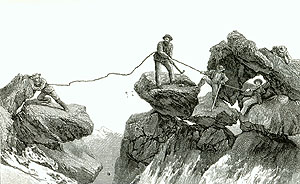 |
Brief Description: This is a course on outdoor literature. Outdoor literature, of course, is a broad topic and includes several different genres including writings in outdoor adventure, nature, the environment, and adventure travel writing. To keep things manageable, the emphasis of this course is on outdoor adventure writing: exploration, survival, sailing, mountaineering, whitewater boating, kayaking, etc. But outdoor adventure writing can't be totally divorced from other related genres. There are a number of key works which--although not technically outdoor adventure--have had a profound influence in all outdoor writing. One prime example is Thoreau's Walden.
In addition to covering important works which had an influence on outdoor adventure writing, it is also the purpose of this course to provide some sense of history. Outdoor adventure activities such as mountaineering and river running have a rich history populated with fascinating men and women, and filled with triumphs and failures, and real-life mysteries. Thus this class encompasses outdoor adventure, its history and the writings which influence outdoor adventure. To provide variety, readings will be selected from a range of different outdoor activities. Some of those activities include survival, mountaineering, horseback riding, river running, arctic exploration, sailing, canoeing, kayaking, desert hiking, and backpacking.
For More Information: Course Website |
Methods of Teaching Outdoor Activities
PE 4445 - 3 Credits
Spring Semester Only |
|
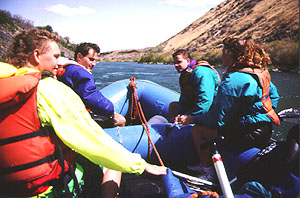
Brief Description: This culminating course for outdoor education majors and minors consists of two parts: a study of the objectives, programs and methods of teaching outdoor recreation activities followed by a practicum experience in which students assist in teaching and leading outdoor activities.
For more information: Course Website |
Outdoor Leadership
PE 3386 - 2 Credits
Spring Semester Only |
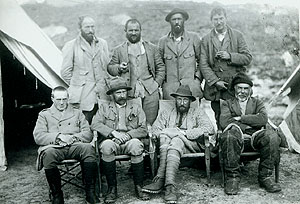 |
Brief Description: The Outdoor Leadership course, held in a seminar format, is designed to provide students with the knowledge to organize and lead outdoor activities. Topics covered include leadership styles, leadership theory, teaching methods, liability, program promotion, planning meeting, safety and environmental impact. During the course of the semester, students will help teach selected outdoor skills and organize and lead at least one trip.
|
Map & Compass Workshop
PE 2282 - 1 Credit (Fall Semester)
(Also Available as PE 4491 Summer Workshop) |
|

Brief Description: The use of map and compass is one of the most basic of outdoor skills. This class is designed to provide enough information and practical experience that students will feel comfortable with land navigation techniques. Topics covered include: map symbols, contour line identification, Universal Transverse Mercator Coordinate System, township and range surveying system, latitude and longitude, map scales, declination, resection and map and field bearings. During the class students go on three map and compass courses.
For More Information: Course Website |
Avalanche Safety Workshop
PE 2286 - 1 Credit
Spring Semester Only |
|
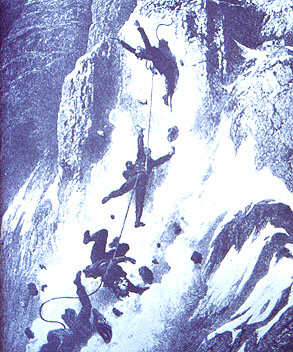
Brief Description: Avalanches are, by far, the most serious mountain hazard in the winter, and this course helps equip winter travelers with the knowledge and skills to minimize or avoid these hazards. Lecture topics include: snow crystal identification, snow pack metamorphism and factors influencing avalanche formation. Field sessions include: snow pit analysis, use of transceivers, rescue techniques and backcountry safety considerations.
For more information: Course Website |
Subsidary sites with information on the Outdoor Education Major at Idaho State can be found at:
[END]